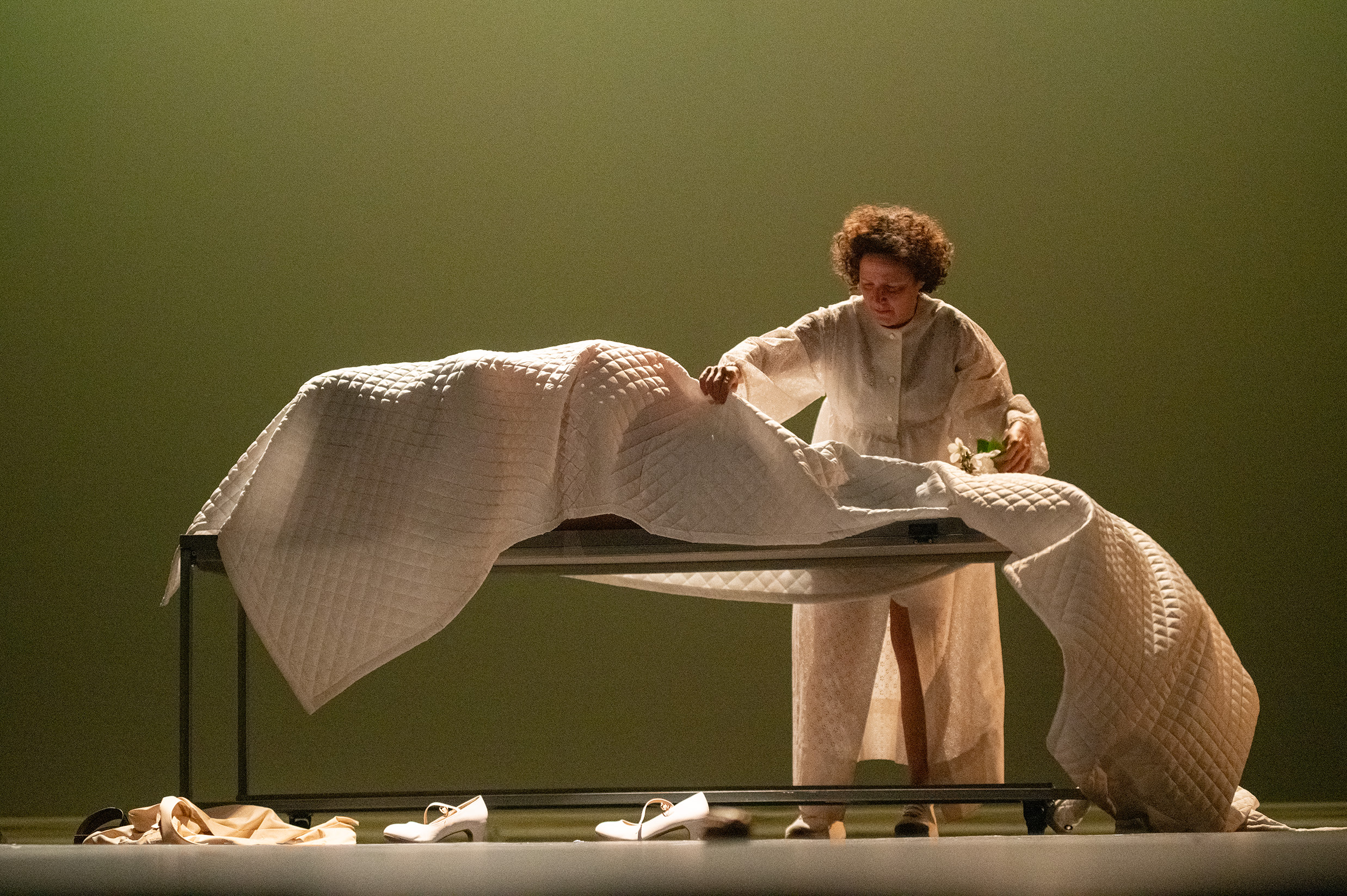

Every January 6th, the tight-knit Latine community of Egg Harbor, New Jersey gathered in a basement cafeteria to celebrate the Feast of Los Reyes Magos—or, Three Kings Day.
For writer/performer Iraisa Ann Reilly, that basement cafeteria is a holy site. It is where Reilly performed in front of an audience for the first time, singing a rendition of “Rudolph, the Red-Nosed Reindeer” on January 6th, 1998 for all the assembled dignitaries, including her Cuban-immigrant grandparents.
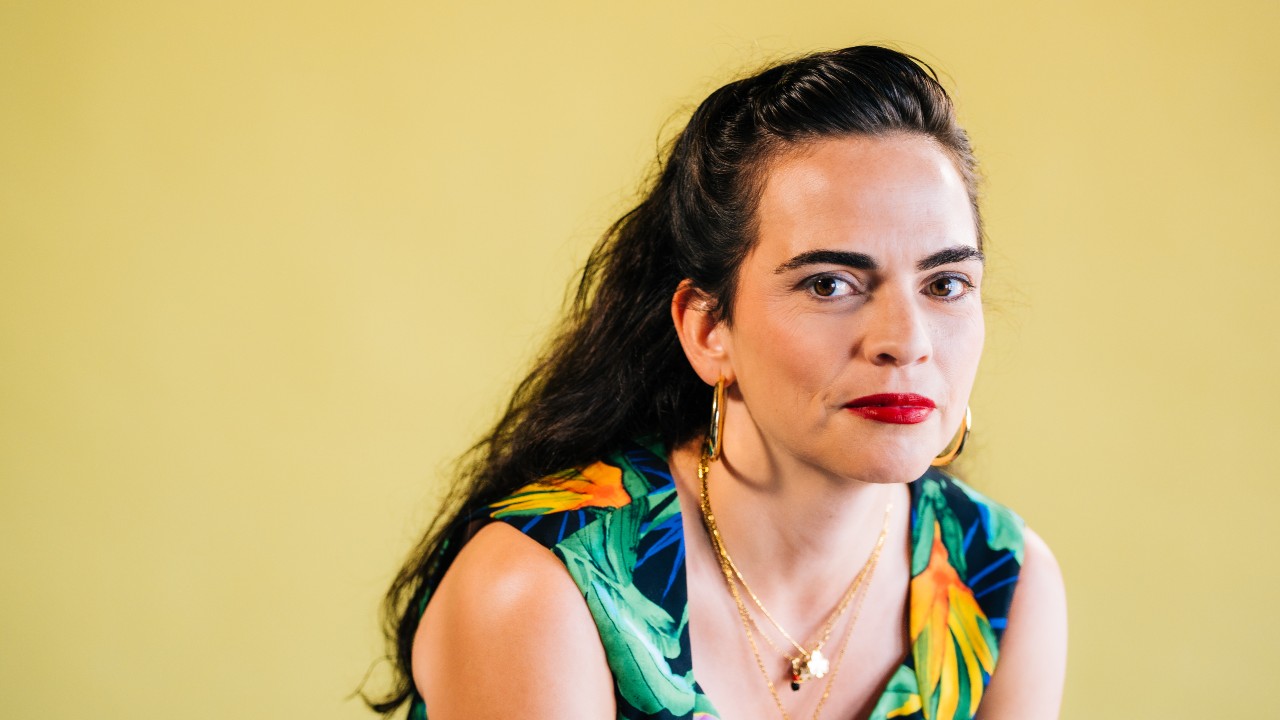
Reilly is transporting audiences back to that fateful day in A Bodega Princess Remembers La Fiesta de Los Reyes Magos, 1998, her new solo work now running at Ensemble Studio Theatre through December 14th (in a co-production with the Lucille Lortel Theatre & Latinx Playwrights Circle) that seeks both to immerse us in the multilingual world of her upbringing and to reclaim that tarnished date of January 6th.
Reilly sat down with Extended Play to discuss Spanish-language variety shows, Latino influence on ‘90s American culture and finding herself as a playwright.
JOEY SIMS: Bodega Princess traces your teenage discovery of performing, but when did playwriting enter the frame?
IRAISA ANN REILLY: It took me until early college to realize that writing for theater was a thing. I went to a Catholic school in New Jersey that was very academic-forward. My parents were always supportive, but they were not artists by profession.
Somebody gave me this terrible piece of advice in college: “If you want to be an actor, don’t tell people you’re a writer.” So when I wrote my first play in college, I didn’t tell people. But then, in 2016, that play became super relevant and important, and I felt I had to get it out into the world.
JOEY: What was that play?
IRAISA: The play was called One Day Old, and it was about Operation Peter Pan, or “Operación Pedro Pan.” In the early 1960s, 14,000 unaccompanied minors were brought from Cuba to the United States after a law was passed in Cuba saying that the state had “jurisdiction” over children. Some parents in Cuba panicked, and an operation happened between the CIA and the Catholic Church to bring all these children to the United States.
My mom did not come to the United States through that program, but I discovered that this law was the nail in the coffin for my grandparents, the thing that made them decide: “We’ve got to get out.”
When relations between the United States and Cuba began to open up again, I felt this was a story that shouldn’t get lost in history. So I self-produced it [at Philadelphia Fringe in 2016]. A couple years later the US started putting children into prisons at the border—the exact danger that had pushed Cuban families to send their children here. Now we are the aggressor; the place where people sent their children, out of fear, is the place causing that fear.
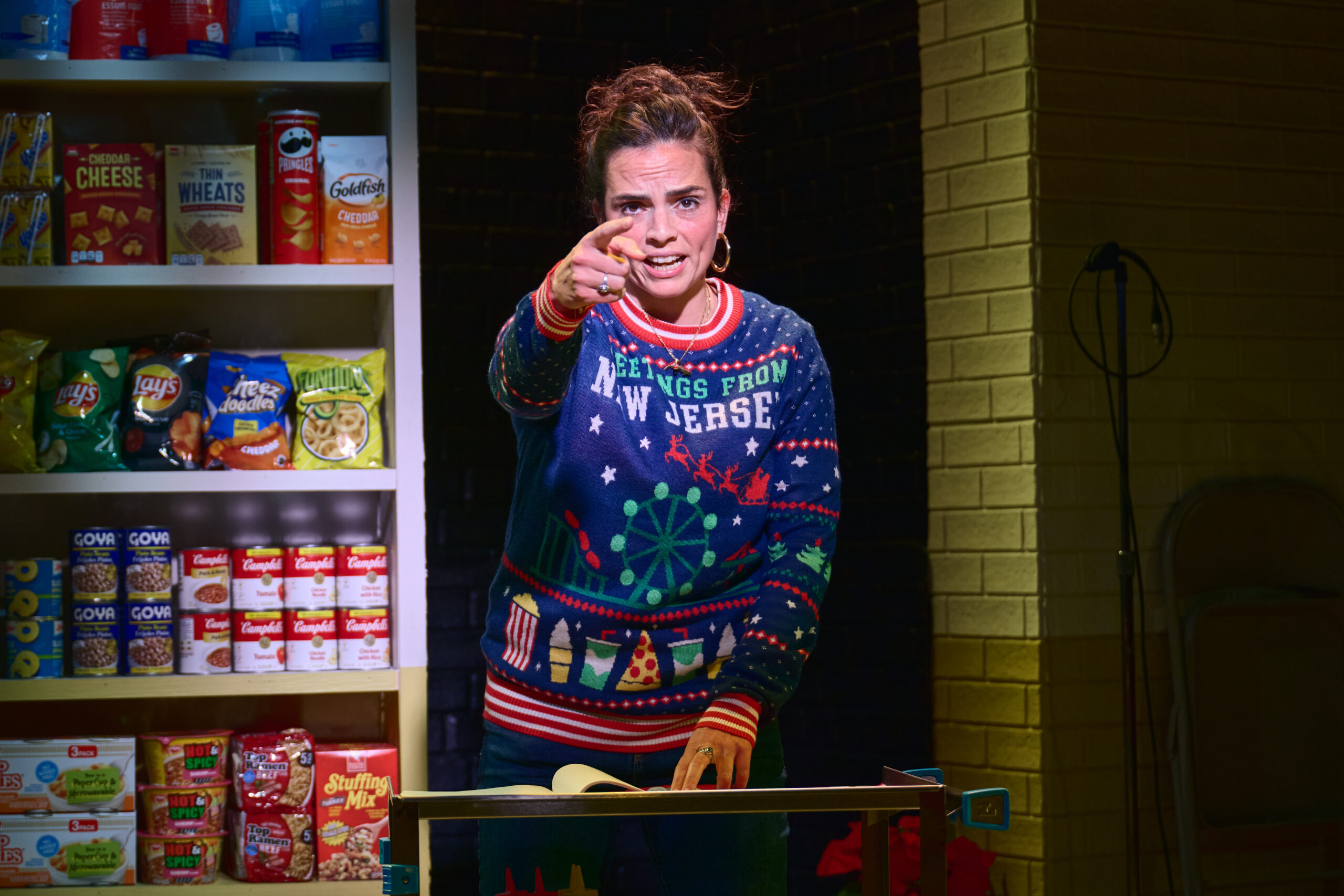
JOEY: And that decision your grandparents made, to immigrate to the US, shapes everything we see and learn about your own upbringing in Bodega Princess. How did Princess come into being?
IRAISA: When I was in Philly producing One Day Old, I was invited to this StorySLAM event. I told the story of my first time performing in front of an audience, which was singing “Rudolph the Red Nose Reindeer” in this basement cafeteria for a celebration of the Feast of Los Reyes Magos, or Three Kings Day, on January 6th 1998.
Five years later, I went back to that story right around when the January 6th riots happened. I remember thinking: “Shit—I love this holiday, and now it’s going to be associated with this.” But that got me thinking about creating a piece that could reclaim that date.
JOEY: The play immerses us so fully in the community where you grew up, this growing Latino community of Egg Harbor, New Jersey in the mid-1990s. To help paint that picture, you take us back through multiple Three Kings Day celebrations prior to 1996.
IRAISA: My wonderful dramaturg Divinia Shorter encouraged me to just write everything I remembered about Egg Harbor, about my grandfather’s bodega, and about this holiday. Just write it all out.
But it was hard to access what that place felt like then. It hasn’t changed a lot, but my relationship to the community has changed—people don’t really know me there, and I used to know everyone.
JOEY: You also offer these ‘90s cultural touchpoints along the way, most especially with the participatory “Macarena” dance competition. Why did you want those in there?
IRAISA: I was thinking about how much influence Latino culture had on “American” culture up until September 11th. And then after September 11th anything foreign, anything coming from immigrants, was villainized. But in the ‘90s, the Latinos had this huge influence on everything. Selena was crossing over. Ricky Martin was huge—technically he’s American, he’s Puerto Rican, but not viewed that way.
Because I did this real “Macarena” dance competition as a kid, I looked back on that song specifically. I remember the original Spanish version came out well before the English-language remix, and I would tell kids in my class, “I heard this like a year ago.” Researching it now and seeing videos of like, all of them dancing to the “Macarena” at the Democratic National Convention… We were on one path, and then this thing happened that made everybody scared. The racism was already there, of course, but that underbelly became very apparent.
Incorporating those Latin influences on culture is where the universal comes in, because if you were living anywhere in the United States, you knew the “Macarena.”
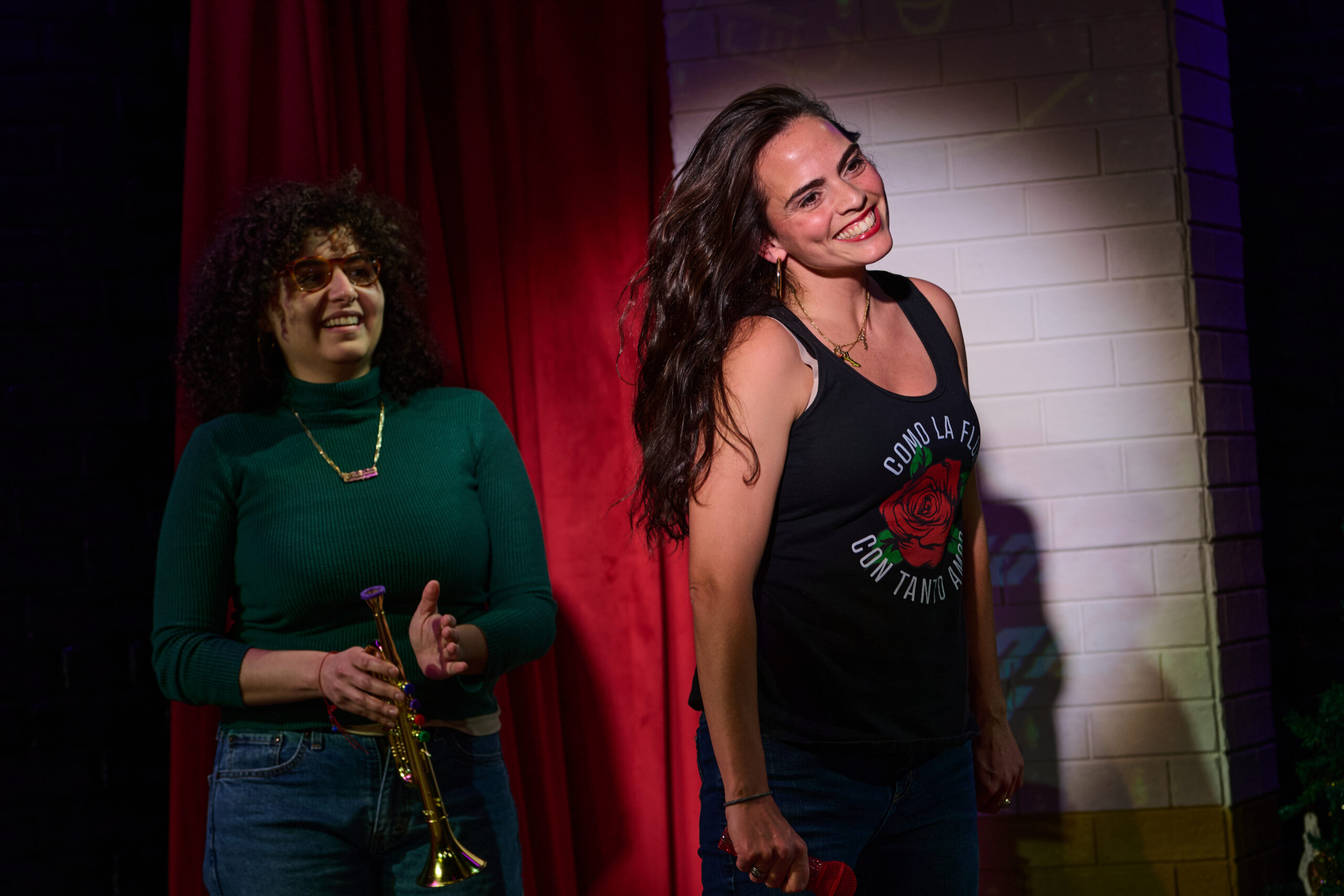
JOEY: You also recreate the Spanish-language variety show Sábado Gigante, which requires a bit more explanation for audiences who aren’t familiar.
IRAISA: Finding out that the longest running variety show in world history was on Spanish-language television—-that was significant for me as someone has been questioned, and criticized, for adding Spanish with no supertitles or translation in my plays, as I do in this one.
Coming from two different backgrounds, one set of my grandparents would only speak Spanish to the other set of grandparents, who only spoke English. But they understood each other. So I wanted to physically put you inside this Spanish–language variety show, and let you experience it.
JOEY: Which for some of us, means experiencing a space where the primary language is not our own.
IRAISA: For the audience who understands it, it feels like home. For those who don’t understand, you might find a great understanding of what it felt like for my grandparents to live in the United States. But play a little charades, and you’ll get by! Just as I saw growing up. We can understand each other.
JOEY: Finally, how did the framing around January 6th allow you to build in the country’s rightward turn without necessarily making the whole show about that?
IRAISA: My answer was leaning into the experiential—by very literally making the play democratic. The audience gets to vote for the winner of all the various competitions we’re recreating. How do we talk about it without talking about it? By making the show participatory and making it democratic. The play itself is the society we should exist in. ✦
A Bodega Princess Remembers La Fiesta de Los Reyes Magos, 1998 continues at Ensemble Studio Theatre through December 14th. Purchase tickets here.
Extended Play is a project of The Civilians. To learn more about The Civilians and to access exclusive discounts to shows, visit us and join our email list at TheCivilians.org.